
What in the world makes geoengineering companies so confident about their ability to manipulate our earth systems?
The Researcher who travelled from Paris to St.Ives had a complex job description.
Chercheuse environnement, énergie, et matières stratégiques Institut de recherche stratégique de l’Ecole militaire (IRSEM)
When I asked what it all meant they explained that they were part of a multi disciplinary academic research project analysing emerging climate intervention techniques and associated risks. Although operating under the auspices of the Ministry for Armed Forces, the project was academically independent.
They had come specifically to meet a representative from our small community group, Keep our Sea Chemical Free, and now we were here on a mizzly February afternoon in a cozy cafe overlooking the harbour.
We chatted generally about our strange encounter with the world of marine geoengineering. I laid out our experiences as I had many times before. But then came a question I’d never been asked .
“Do you think the patriarchy was a factor in your interactions with Planetary Technologies?”.
I paused. The thought hadn’t occurred to me.
I’ve noticed that even saying ‘the patriarchy’ can feel loaded – as if naming it is somehow an attack on individual men rather than on an entrenched power hierarchy. Maybe I’d never explicitly thought about it because I didn’t want to sound like a ranting feminist even though I am a ranting feminist! But this question was being asked by an experienced French researcher who had travelled by train from Paris to be here in St.Ives. And they were asking it in a neutral and matter of fact way.
So how did the patriarchy impact our interactions with the push to test chemical geo engineering in St.Ives Bay?
On a surface level, I had noticed that the leaders of our movement were women which contrasted with the all male line up of Planetary Technologies. I’d wondered if that had made it easier for them to diminish our concerns, to perhaps frame our objections as not only unscientific but just a tiny bit hysterical? When I was discussed in a far away twitter thread in the US, I was just that filmmaker who wasn’t the right kind of environmentalist. And then there was an uncomfortable incident of male anger verging on intimidation during a discussion with staff members from Planetary Technologies. Did we give the men we met from this Canadian company a tad more respect because of the way we had been socialised around science and power?

As we sat together looking through rain spattered windows at St.Ives harbour, I mentioned these issues. But nothing about them shouted patriarchy. If anything, it was more of a whisper, hard to pin down and easily explained away.
But then I sat back in my char, took a sip of coffee and it hit me.
Of course the patriarchy has had an impact on our interactions with Planetary Technologies. It has left a foundational imprint on the way we view earth systems and our human role within it. It is linked to the idea that we can dominate and bend nature to our will and to the belief that we are separate from our environment. We are a superior intelligence, we can make tools of impregnable complexity and create societies of immense sophistication. We are kings with an almost divine ability to comprehend and manipulate our earth systems – even on a global scale.

photo: Planetary Technologies website
Mike Kelland, the head of Planetary Technologies, had a heroic headshot on his website. Shot from a low angle as he gazed into the middle distance, he looked like a powerful tech bro on a mission.
When we met him in person Mike was apologetic and collaborative and his Canadian accent was charming. The flip side of this was an individualistic moral clarity as if he alone in the room had grasped the horror of the climate emergency and he alone cared about his children’s future. The implication was that anyone who disagreed with his methods didn’t care about these things. Perhaps we simply didn’t understand. From his perspective humans had no time to mess around – we had to seek climate solutions and we had to do so fast. I heard echoes of the ‘move fast and break things’ mantra of the Silicon Valley tech bro elite.
Where did the belief that natural systems can be subordinated and manipulated by humans come from? During the 18th century Enlightenment, nature came to be defined as something to be controlled and dominated by white men. This domination would extend to relationships with other groups of people namely women, indigenous and black people.
“Gradually, the natural world was replaced in the minds of European male scientists as a mechanical entity, something that functioned through predictable laws, which, if fully understood, would allow male scientists to control it in totality” (*1)
In the 19th century there was considerable interest (notably from the military) in weather manipulation. This took off during the cold war and scientists on both sides considered using nuclear weapons in the artic to alter global temperatures. Meanwhile the US Navy was exploring hurricane manipulation as a weapon of war and weather manipulation was used in Vietnam.
Mike Kelland told us about the ‘insane’ trajectory for his company’s growth. The plan was to remove one billion tonnes of carbon from the atmosphere each year by 2035. At one local meeting, someone did a back of the envelope calculation about what scaling up to their projected ‘insane’ ambition would entail. It would involve a gigantic new Ocean Alkalinity industry and many thousands of sites around the world pumping out billions of tonnes of alkaline slurry into the oceans. Planetary kept insisting that this was indeed their trajectory – although they preferred not to dwell on the industrialisation and emissions this would entail. It was about a year later that they quietly dropped their projections by a full decade. I find it quite remarkable that a local person in Cornwall, who turned up at a public meeting, was able to accurately call out Planetary’s hyperbole the very first time they heard about their plans.
I now know that inflated claims based on nascent science and speculative techniques are a hallmark of carbon removal companies. In the 5 or so years Planetary have been operating, their website tells us they have removed around 8000 tonnes of Carbon Dioxide (*2). This from a company that was promising to remove a billion tonnes per year by 2035. I now know this kind of projection hype is standard for geoengineering companies which have delivered a tiny fraction of their promises yet continue to ramp up selling carbon credits as a future bet. 49.5 million tonnes of carbon removals have been contracted by big business since 2019 yet only a tiny fraction, 1.7 million tonnes, has actually been delivered. (*3) And this doesn’t even get into the difficulty of verifying actual removal in locations as complex as our oceans. Such macho posturing, surely comes from the bedrock philosophy lingering in so much science and technology, that humans are able to dominate and manipulate the earths natural systems.
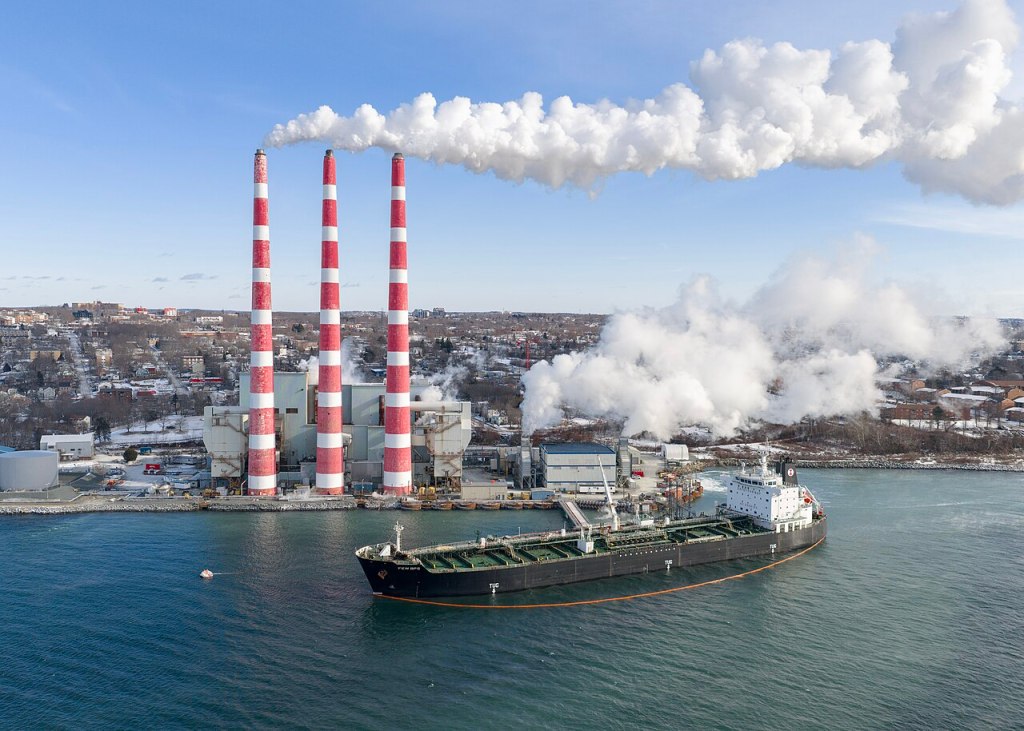
Our modern geoengineering culture emerged from earlier climate manipulation science. Geoengineers believed scientists could provide a solution to any problems they encountered. Initially these views were considered so dangerous they were consigned to the scientific fringes. But in early 2000, geoengineering moved into the mainstream. Scientists and companies began to express more concern about potential environment impacts and caution about implementation. Geoengineering company websites filled with beautiful natural images and they began to come up with safety protocols to reassure the public.
This is the world Planetary swims in. Expressing caution, trumpeting their science and community relations, yet pushing for faster and faster deployment whilst sweeping up funding from high emitting companies. As the climate crisis accelerates with appalling impacts for life on earth, geoengineering proponents see this as proof that their technology is essential and inevitable. It becomes a logical step to pollute the ocean in order to protect it from ongoing and historical human pollution which has led to climate heating and acidification.
Meanwhile regulators struggle to catch up as money pours into geoengineering ‘solutions’. And now in 2026, it is the tech billionaire class who are heavily investing in geoengineering and fossil fuel companies that are the most enthusiastic about its use.
Planetary had monetised St.Ives bay by selling their own carbon credits to big business before locals had any idea the company even existed. It was an ocean grab that made the people who lived and worked around the bay feel irrelevant. I imagined a beautiful photo of our bay hanging in some CEO’s office making them feel like they were genuinely helping the climate crisis. In fact they were investing in a speculative and potentially dangerous technique which the UN had labelled as potentially causing ‘deleterious effects that are widespread, long-lasting or severe’.(*5)

Of course most of the men and women working in the field of geoengineering would consider themselves far removed from the patriarchy. Many female scientists will have experienced outright sexism and will be rightly proud of excelling in their chosen field.
But if we take a step back to the basic premise of geoengineering, that is the idea that humans can deliberately manipulate the earths climate systems at a global scale, there is a breathtaking underlying premise in the domination and control of nature. And in the world of geoengineering companies this often come with a cavalier arrogance about the deployment of such techniques.
And if that doesn’t shout patriarchy, I don’t know what does.
written by: Senara Wilson
- BOYS AND THEIR TOYS – The History of gender and geoengineeringJake McIvor : University of Guelph, 2024 (Ontario, Canada)
- https://www.planetarytech.com
- https://www.cdr.fyi via CIEL
- https://www.climatestoriesatlantic.ca/stories/planetary-power
- https://www.imo.org/en/mediacentre/pages/whatsnew-1854.aspx


