TRAILER – 57 seconds
FULL DOCUMENTARY – 41 minutes
The links above are for the trailer and the full 40 minute documentary about what happened when a Cornish community was confronted with the sudden reality of a chemical experiment happening in St.Ives Bay. Canadian company Planetary Technologies reassured locals that this was going to heal the ocean and combat global heating. So did demanding a halt to the experiment mean that local people were standing in the way of genuine progress in the climate crisis? After all, Elon Musk was backing the experiment and there’d already been a secret test that seemed to go ahead with no question. Is the community scientifically illiterate and insular or is there more to this story?
Director: Senara Wilson
Reviews
“Keep Our Sea Chemical Free” is a wonderful, and emotive film to inspire people to look towards nature-based solutions to breathe life back into our beautiful coastal seas. The film is a refreshing message inspired by community-driven people to maintain ocean health through natural processes”
Dr Ian Hendy : Senior Lecturer `·.¸¸.·´¯`·.¸. ><((((°>
Tropical Marine Ecology,Marine Restoration and Conservation Blue-carbon Institue of Marine Sciences, University of Portsmouth
“It sends a message to one of the (self-styled) leading proponents of marine geoengineering and carbon removals (at a global level) that they cannot justify their corporate activities on the basis of poor quality science. It shows that people are watching these companies and prepared to put themselves on the line to challenge their proposals on their own technical rationale. And it shows that, when you do that and when those technical grounds are found to be somewhat hollow, there is then nowhere else for their arguments to go.“
David Santillo : Senior Scientist,
Greenpeace Research Laboratory
Would you like to screen the film or host a discussion in your community?
We’ve been sharing the film with communities facing geo-engineering experiments and other environmental challenges. It’s a useful way of introducing the concept of geo-engineering and suggesting ways in which people can challenge the growing momentum behind climate techno fixes. The film is also an uplifting account of the power of ordinary people. Please get in touch if you would like us to contribute to a screening in your community, or if you would like a presentation about our experiences. Message us at keepourseachemcialfree@gmail.com
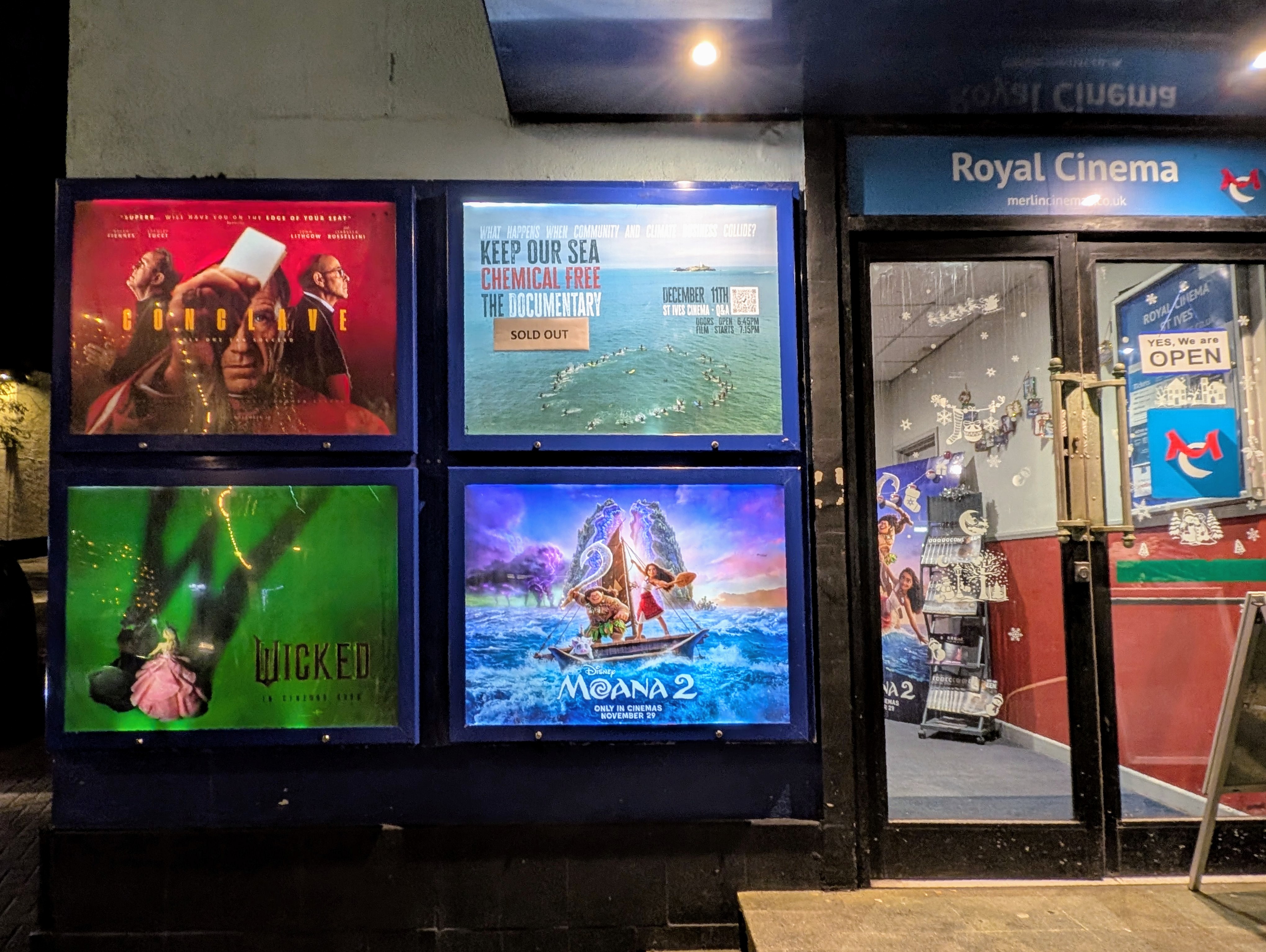
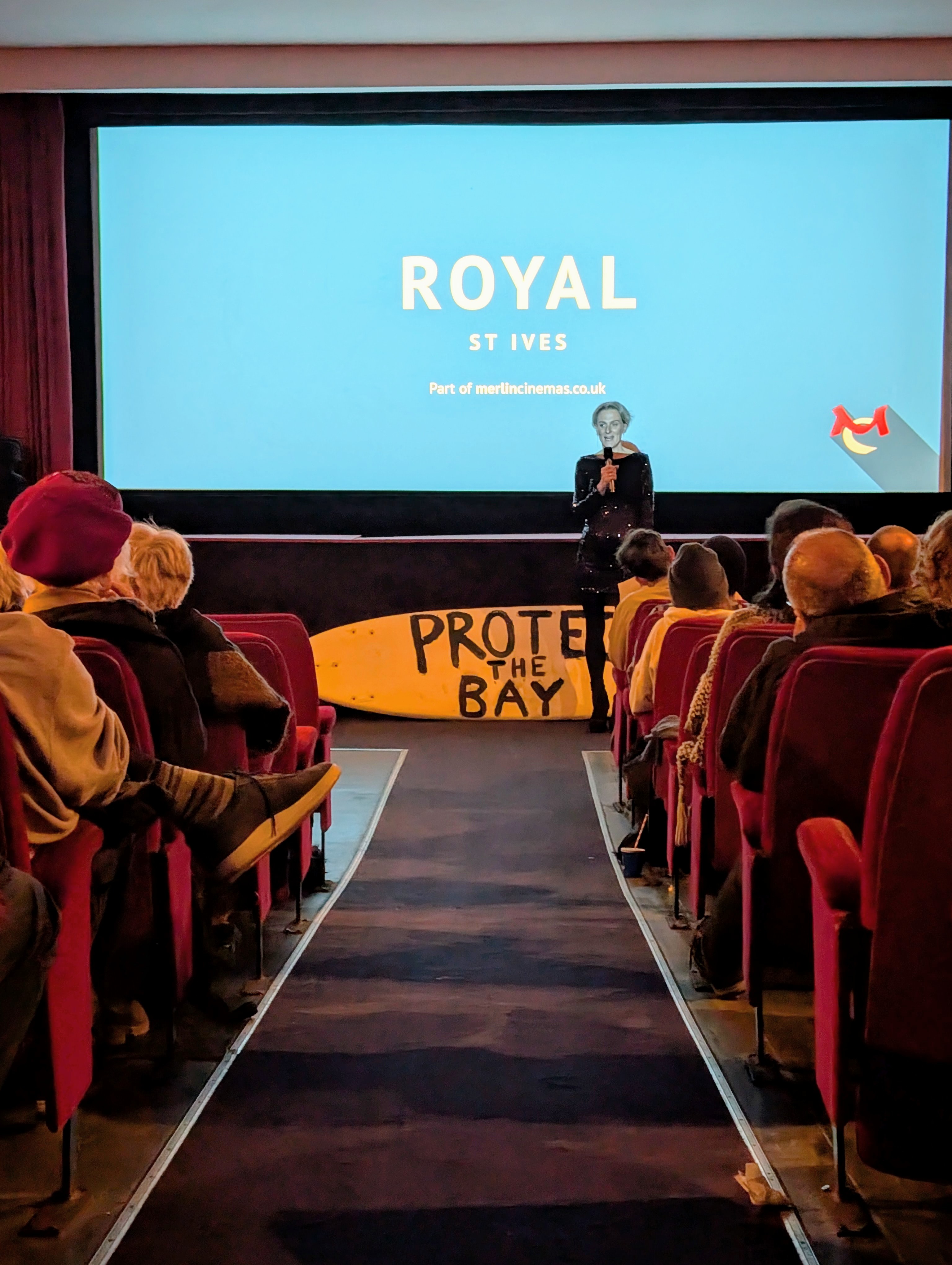
World Premiere – Royal Cinema, St.Ives, Cornwall
11th December 2024
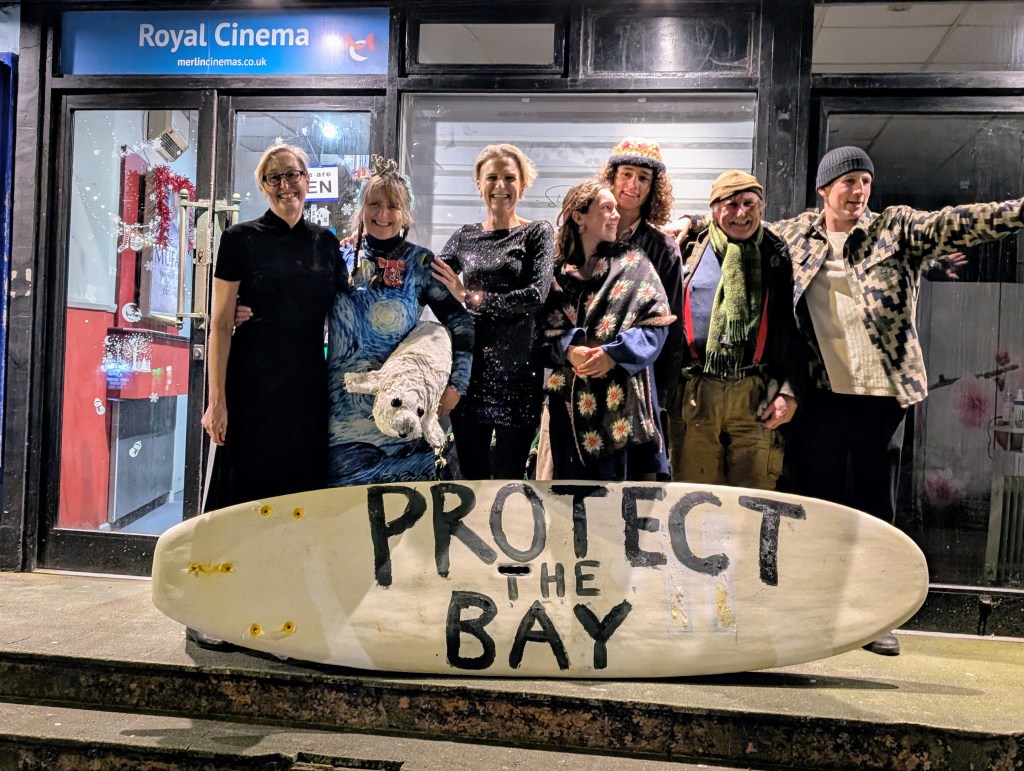
“I didn’t mean to make a documentary – I was too busy organising the resistance. But then I realised this wasn’t just a local issue and we needed to tell our story.”
Senara Wilson – Director: Keep our Sea Chemical Fre




More about the film and director
Senara Wilson spent many years working in TV documentary production in London before returning to her home county Cornwall in 2009. Here she makes documentaries and community based films with a strong sense of place and identity. She has also created work for Tate St.Ives, The Leach Pottery and local artists and surfers. Senara is interested in environmental and social justice issues and the way in which they intersect. You can check out some of Senara’s work on her YouTube channel.
” It was only in the summer of 2023 that I started thinking about making a documentary. Up until that point my brain had been in organisation, research and activism mode. I did grab my camera at the last minute when our group went on a boat trip to find the sewage outfall pipe by Godrevy Lighthouse. But I didn’t even pack my proper sound kit – I just couldn’t be a film director and a community organiser at the same time. The months rolled by and although we kept hearing that a decision on renewed testing was imminent – it didn’t happen. I found myself with more time and a feeling that I needed to somehow capture what our community was experiencing.
I started by interviewing the key people – and working out that the documentary was going to be fully from our community perspective. An unfolding of our understanding of what was happening in St.Ives Bay and our response to it. Luckily, a key member of our group is filmmaker Oli Riley. He’d gathered loads of footage from people who’d come along and filmed the first protest on April 2023 and he’d made a beautiful short film. I’d asked Alban Roinard to document the protest with his drone and he’d captured some stunning footage of the paddle out. We’d also invited another talented local cinematographer to get some shots with his underwater rig (thankyou Greg Dennis). Everyone donated their time and energy and creativity – no questions asked and totally free. When I reviewed the footage I knew there was something powerful there. Especially when combined with the snippets of speeches protesters had filmed on their phones. But other than that I had a distinct lack of shots to illustrate the interviews I’d filmed. I had some footage of the bay taken over many years…but not enough.
This all led to some gentle despair as I sat in front of my computer – wrestling with how to edit this into a cohesive story. I realised that I’d have to put myself in the mix – and use my own voice and perspective as the central narrative. It’s not something I’ve often done – I usually try to get contributors to tell the story and keep in the background shaping the story through the edit. It felt exposing but also liberating and honest. On the off chance I asked Alban if he had any drone footage of the bay that I could use. Alban loaded up a drive for me and told me he trusted me to use it in in any way I saw fit. When I got home and reviewed it – everything changed. In front of me was years and years worth of incredible footage of St.Ives Bay and the countryside around it. Images that could only come from a human with a deep and profound connection with this place and a forensic knowledge of local conditions. In the midst of it all, a stunning shot of a minke whale rippling through the bay. I was dumbstruck, and then excited. We were on – the documentary was going to work.
And it would work in a way that reflected the people who lived here and their profound sense of connection to our particular edge of land where it meets the sea.”


