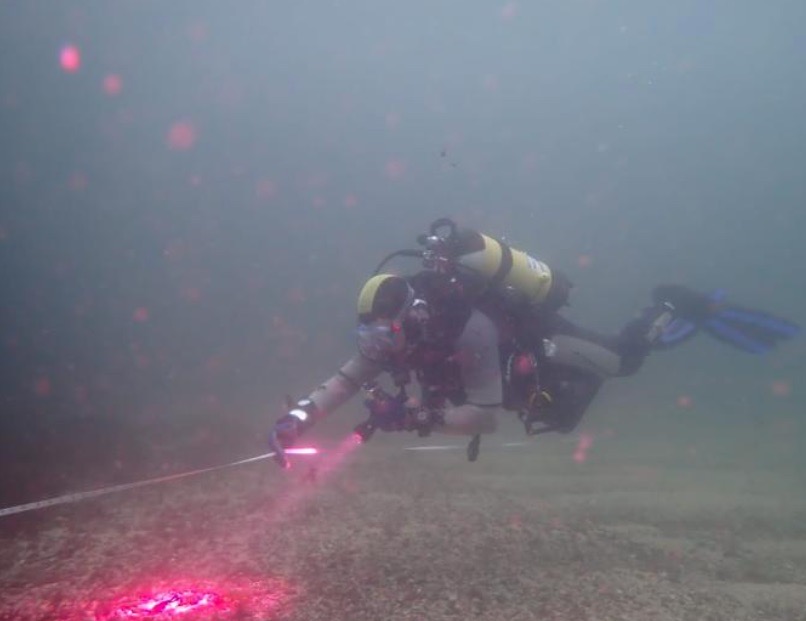
The idea of carrying out dive surveys in St.Ives Bay is the brainchild of Sue Sayer. Sue has many brilliant ideas – one of them, many years ago led to the formation of the Seal Research Trust. This particular brilliant idea came from an on line meeting with geoengineering company Planetary Technologies (PT).
During the meeting, PT (who were planning on discharging many thousands of tonnes of Magnesium Hydroxide into the bay) admitted that they didn’t have a proper baseline study of what was in the bay already.
This caused some very politely expressed astonishment from the scientists in the room. How can you carry out an experiment without a baseline? It just doesn’t make sense. (watch the meeting here – spin to 55 minutes for baseline converation)
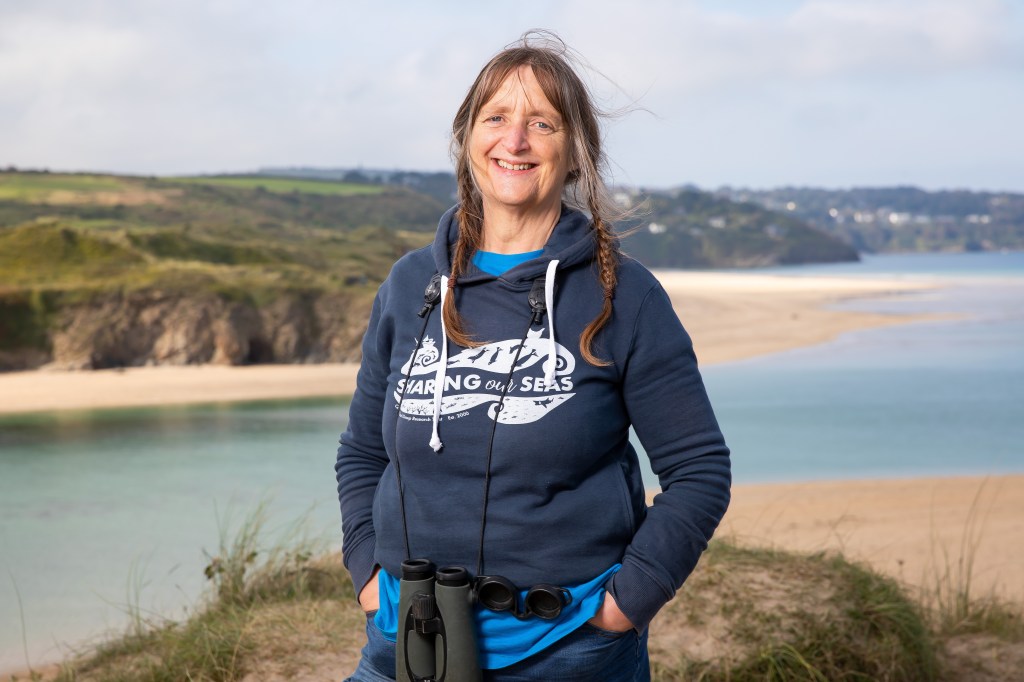
And all this got Sue thinking. Why shouldn’t we find out exactly what is in our bay – not for commercial exploitation or geo engineering experiments – but because we need to understand the bay in order to protect and restore it, and to find ways of buffering it against future climate shocks.
And all this got Sue thinking. Why shouldn’t we find out exactly what is in our bay – not for commercial exploitation or geo engineering experiments – but because we need to understand the bay in order to protect and restore it, and to find ways of buffering it against future climate shocks.
But dive surveys, (even ones with volunteer divers), are expensive. Boats and equipment need to be hired and data and observations analysed and interpreted. This is where the Flotilla Foundation provided a massive helping hand and they have funded multiple years of baseline surveys in the bay. This is now the third year of dive surveys and the results have been incredibly useful and interesting. But beyond that, the volunteer divers have been left with a sense of awe and wonder at the beauty of the undersea world they have visited.
I was lucky enough to get my own private seminar from Dr Ian Hendy who is leading the dive surveys. He was on a field trip studying mangrove swamps on the day of our celebration, so he gave me a fascinating preview of the survey results to pass on. Here is some of what he said;
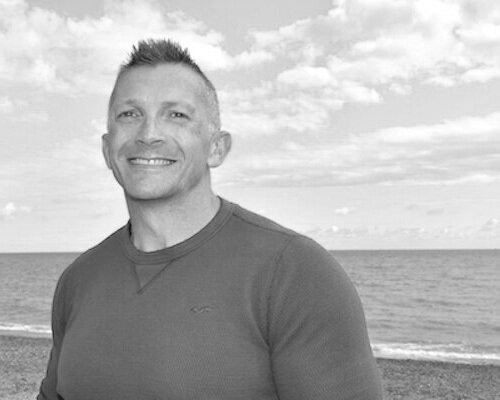
Dr Ian Hendy, Senior Lecturer Portsmouth University
Tropical Marine Ecology, Marine Restoration, Conservation and Blue Carbon. Photo: Algapelago
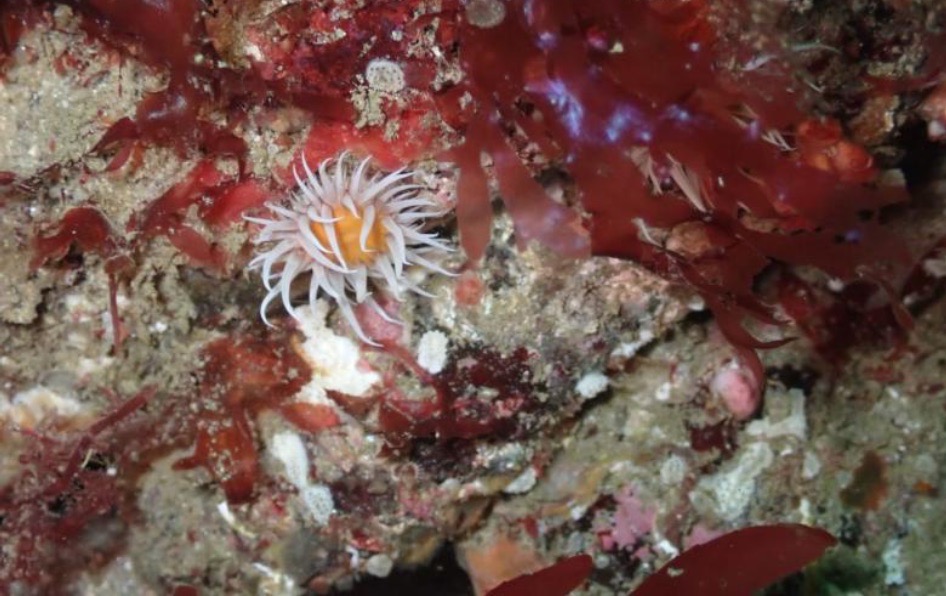
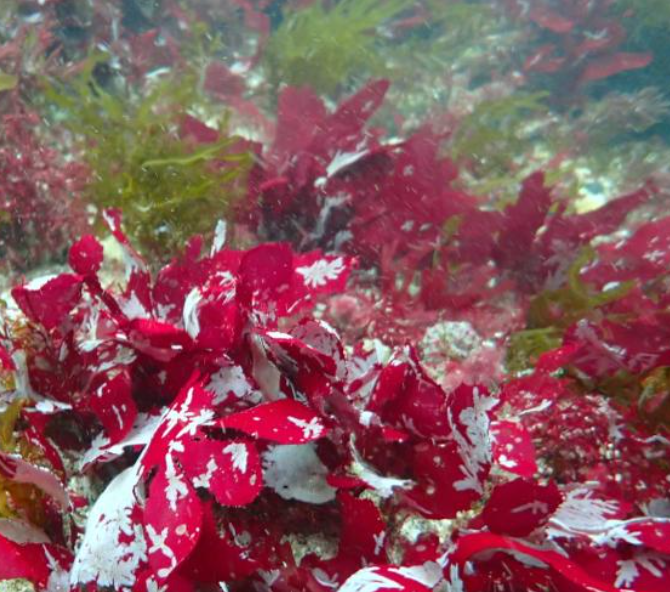
“As I’m sure we all know – St.Ives Bay faces multiple challenges in that there are inputs from mining, agriculture and river run off, not to mention sewage. There is also of course the ongoing and serious impact of climate change (heating oceans and acidity). All this results in a loss of connectivity – so the bay is facing adversity. By properly surveying the Bay over multiple years we are better able to understand it and hopefully to protect and enhance it. Here is the good news – St.Ives Bay still has a mosaic of habitats which creates the rich life we see in the bay. At the Godrevy Island end we find a rocky reef sub strata – so lots of rocks and chasms and reef plates. On these are dense and rich kelp forests which are super important.
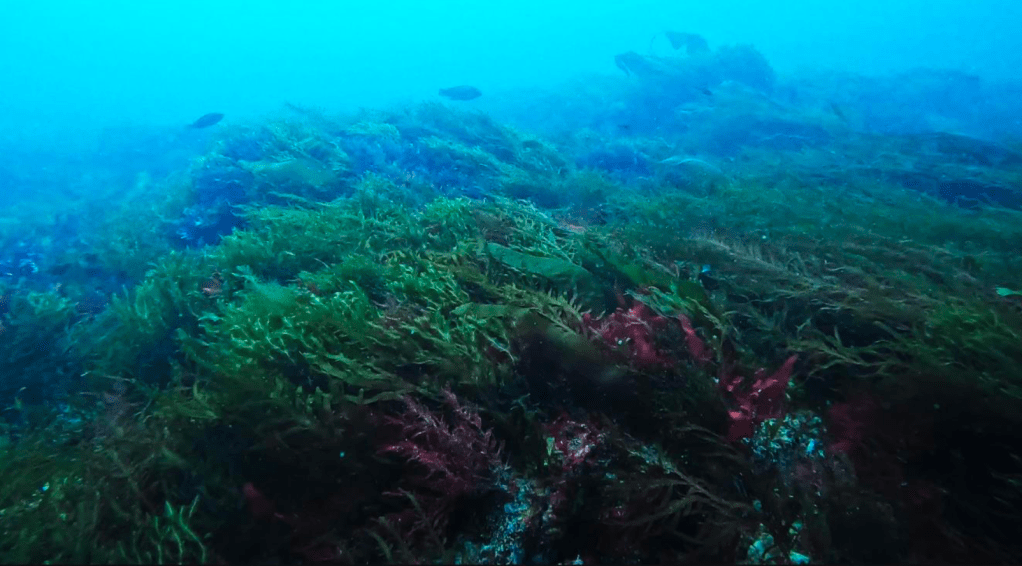
Here we find a multitude of commercially important species like Bass and Pollock. And these kelp forests also serve a nursery function for a lot of juvenile species – particularly the beautifully coloured wrasse.
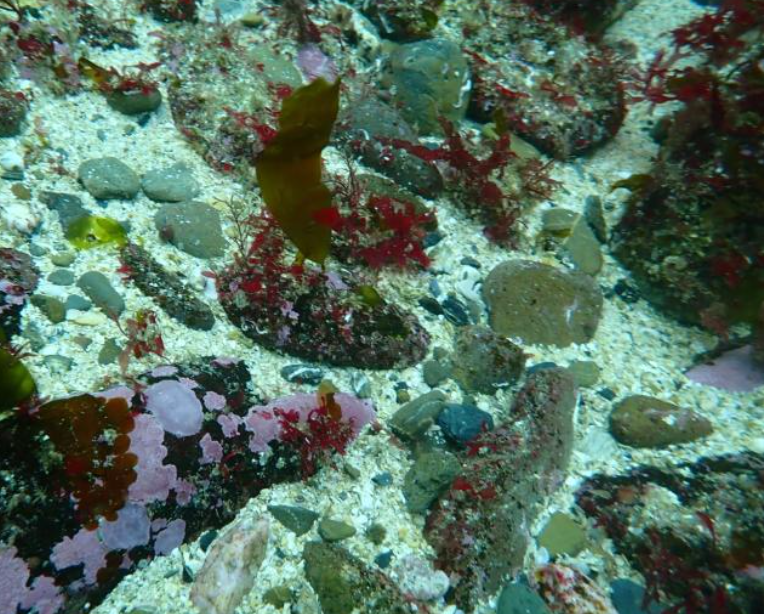
As we go further west towards Carbis Bay, the habitat changes dramatically to a more transient soft sandy sediment. Unusually, we still find algae growing up through the silt and sand in these areas which shows a high complexity of biodiversity. Luckily too, we have a rich complexity of currents in St.Ives Bay linked to The Gulf Stream.
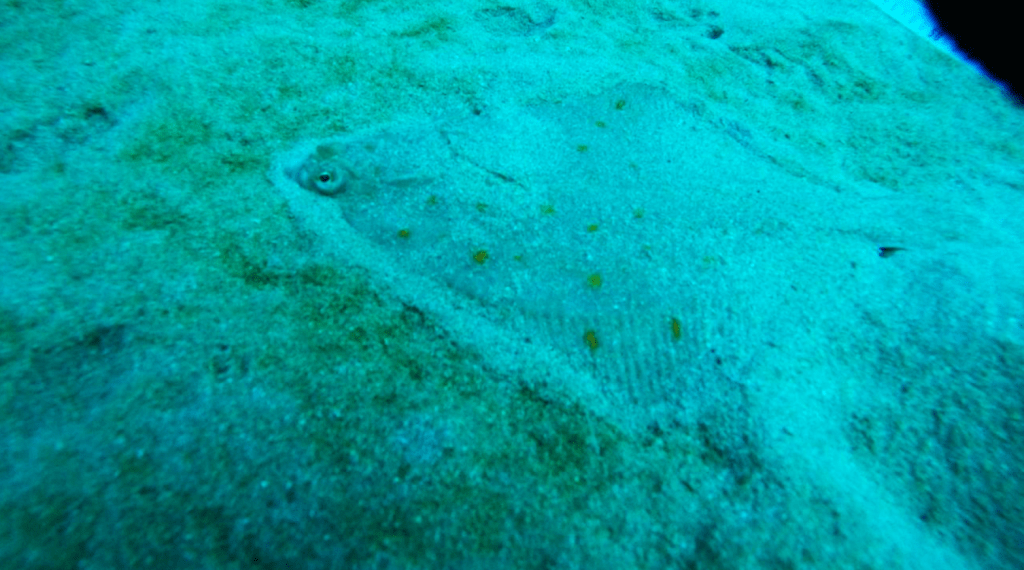
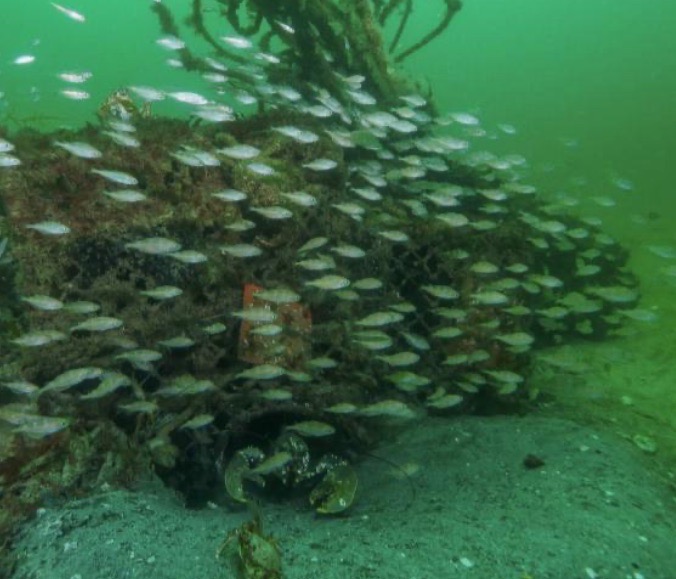
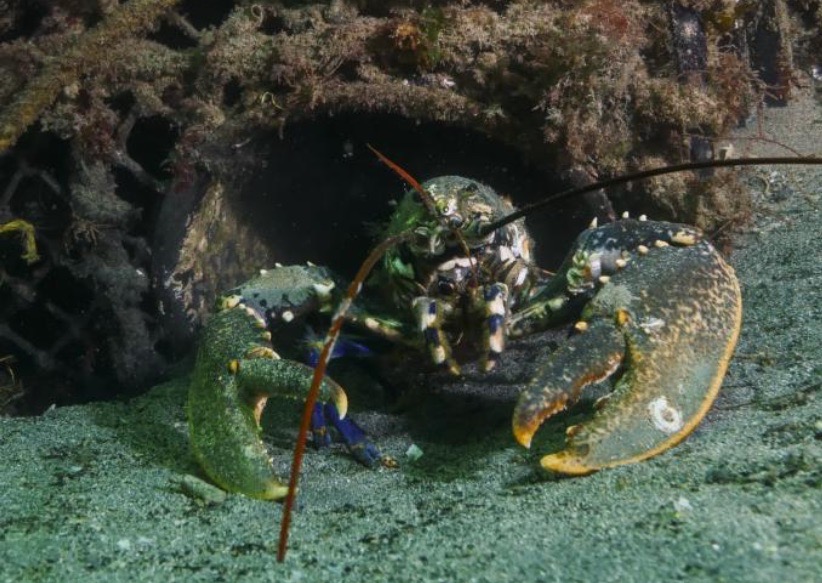
In this sandy habitat we have found a high abundance of marine organisms like sand eels, flat fish like Plaice and we also see rays and lots of lobsters hiding in hidey holes.
The varying habitats – that is the kelp forests, the rocky reefs and the patchy sand – enable juvenile organisms to utilise these spaces as stepping stones as they develop. So the mosaic of habitats here allows for a rich and biodiverse marine life.
Functionally, all sites are good, but the further away from the point source of the sewage outflow, the biodiversity increases, even though the structural complexity of the seabed declines further away. So this is telling us something about the impact of the sewage outflow.
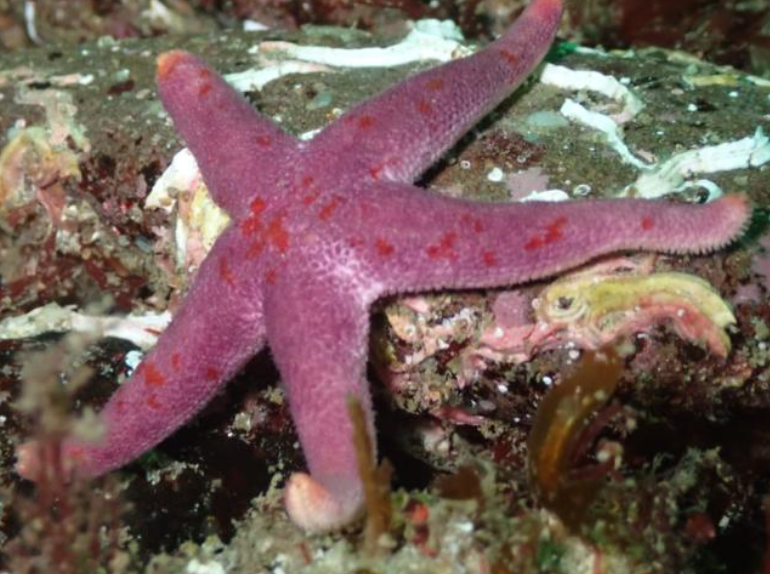
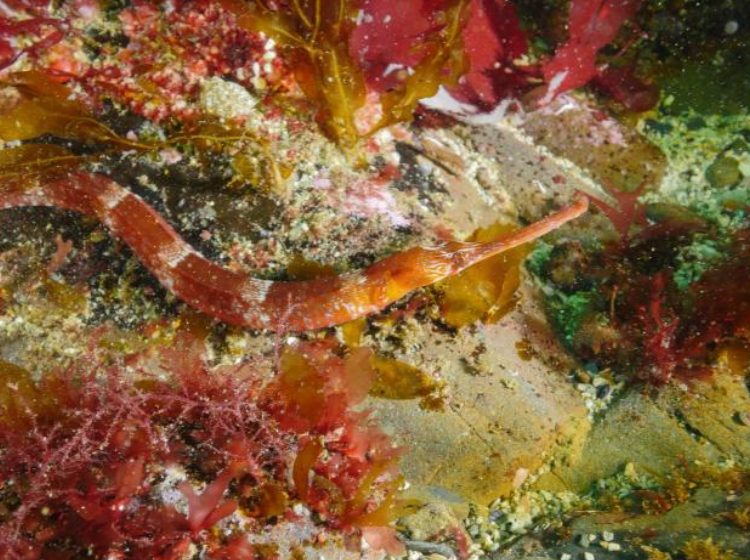
The dive surveys have been a brilliant experience for those involved. I asked the divers for some of their favourite encounters and here is what they said;
“a favourite sitting was watching and filming Masked Crab scuttle along the sand – 45 years of diving and never seen one under water.”
“On the last dive of the year we were in sandy shallows and there were a wonderful amount of barrel jelly”
“I cannot forget the carsharks a few of us encountered”
“finding and filming a pile of discarded lobster pots that had become home to several massive lobster”
“schools of Atlantic mackerel .. swam right above us and covered the upper section of the dive sites a couple of times”
“swimming with a massive barrel jellyfish”
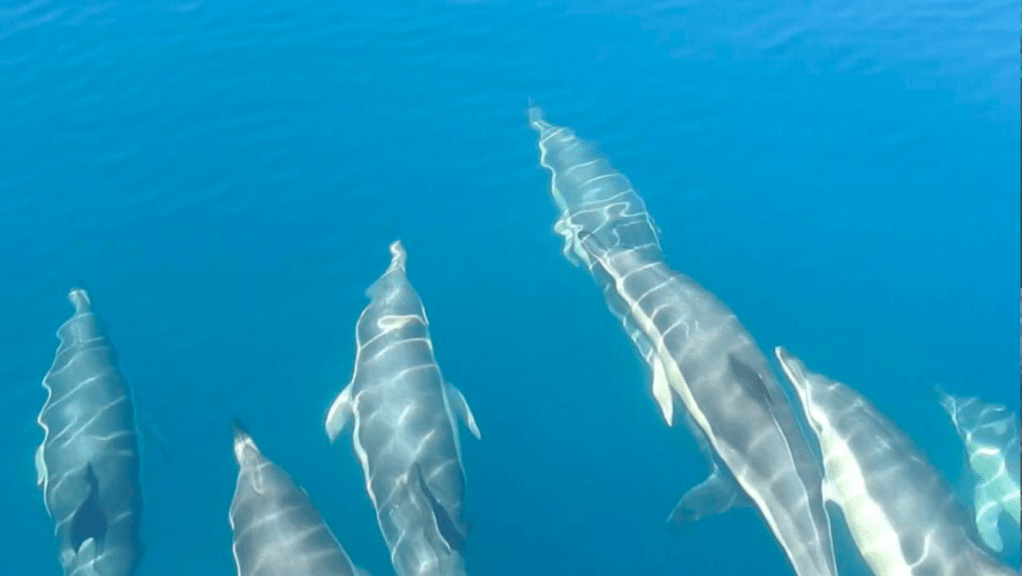
“We saw pods of dolphins several times, and one of the pods had small calf”
Written by Senara Wilson, June 2026


